


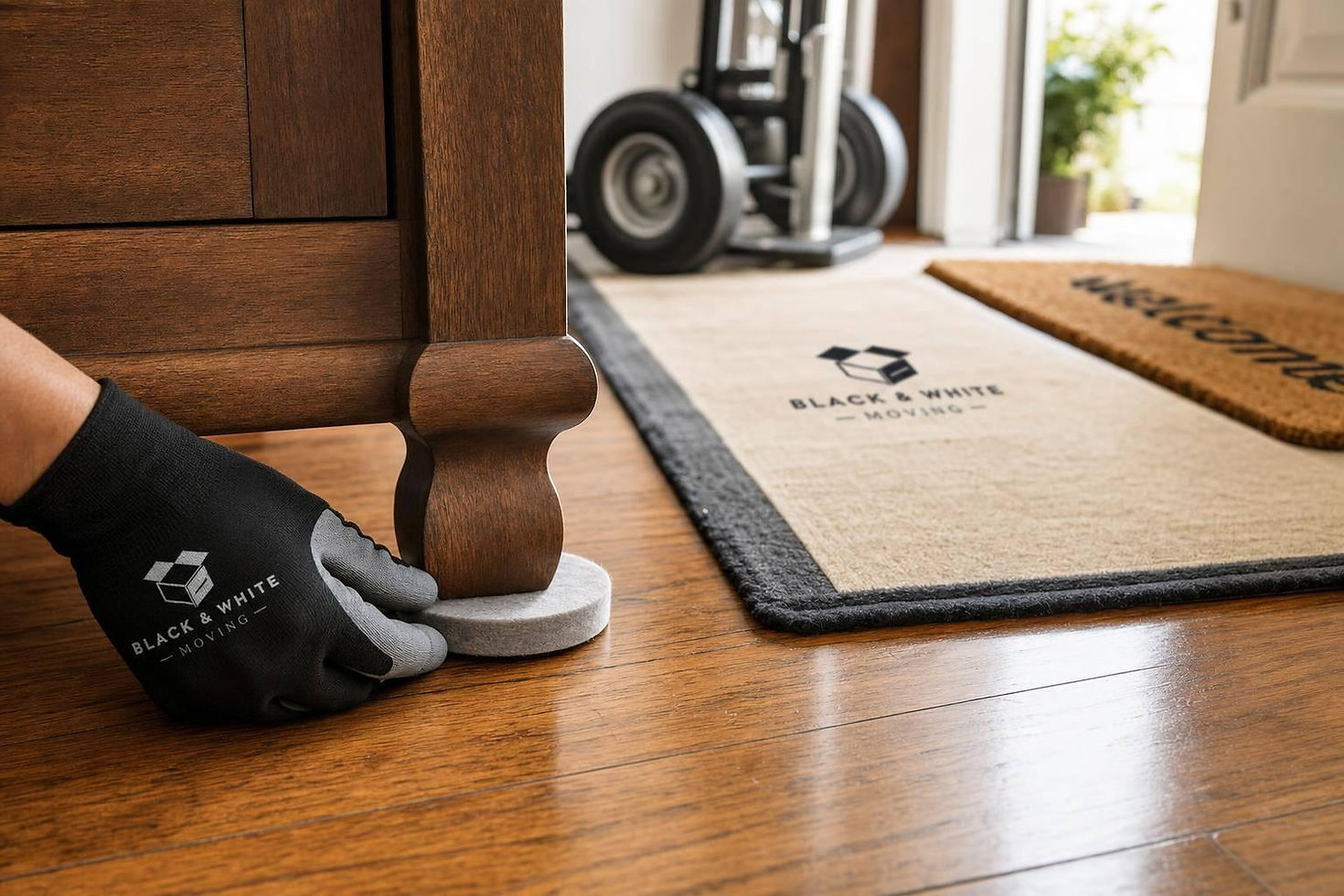
8 Ways to Protect Floors When Moving Heavy Items

A move can damage floors in minutes, and repairs can cost $25 to $100 for small marks or $500 to $2,000+ for heavier damage. The fix is simple: clean the path, cover the floor, use the right sliders or dollies, pad sharp edges, and keep dirt and water at the door.
If I wanted the short version, I’d focus on these 8 steps:
Plan the route and remove trip hazards
Put down floor covering like Ram Board, rosin paper, or hardboard
Use cardboard, blankets, or rugs for short paths
Set furniture on sliders or glides instead of dragging
Use rubber-wheeled dollies for heavy loads
Wrap legs, corners, and sharp edges
Match the protection to the floor type
Control dirt and moisture with mats, shoe covers, and clean shoes
One small mistake can scratch, dent, chip, or tear a floor. Most damage comes from dragging furniture, dirty dolly wheels, trapped grit, wet entry points, and dropped corners.
How to Protect Your Floors & Carpets while Moving
Quick Comparison
Method | Best For | Helps Prevent | Watch Out For |
Route planning | All moves | Bumps, drops, tight turns | Narrow doors, stairs, cords |
Ram Board / rosin paper / hardboard | Main paths | Scratches, dents, scuffs | Grit under the covering |
Cardboard / blankets / rugs | Short moves | Light scuffs, impact marks | Loose edges, rough rug backing |
Sliders / glides | Furniture on floors | Scratches, gouges | Wrong slider for the floor |
Rubber-wheeled dollies | Appliances, heavy loads | Dents, scuffs, gouges | Dirty or hard wheels |
Edge wrapping | Corners and legs | Chips, scratches, dents | Padding that slips off |
Floor-type match | Hardwood, tile, vinyl, carpet | Wrong-tool damage | Moisture, joint stress, grout lines |
Mats / shoe covers | Entry points | Grit scratches, water marks | Slippery or loose mats |
If you’re moving in a place with sand, damp air, garages, patios, or mixed flooring, these steps matter even more.
Common Ways Floors Get Damaged During a Move
Most floor damage doesn't come from one dramatic mishap. It usually comes from small mistakes that happen again and again during a move.
Dragging Furniture Across Hard Floors
Dragging furniture is one of the fastest ways to mark up a floor. When someone pushes a sofa, dresser, or appliance instead of lifting it, the floor can end up with surface abrasions, deep scratches, and scuffs on hardwood, laminate, and vinyl [2][8]. On vinyl plank (LVP), dragging can also tear the top layer or pull joints apart [7][8].
Hard or Dirty Wheels on Dollies and Hand Trucks
Dollies and hand trucks can help with heavy loads, but they can also do damage if the wheels aren't right. Hard plastic or solid rubber wheels put a lot of force into a small spot, which can leave dents. And if grit gets stuck in the wheels, that debris can scratch the finish as the dolly rolls across the floor [1][3].
Grit and Debris Trapped Under Protective Coverings
Protective coverings only help if the floor underneath is clean. If sand, dust, or small stones get trapped below the covering, they can grind against the surface like sandpaper [2][10].
Moisture at Entryways and Garage Doors
Entryways and garage doors are easy places to overlook, but they're often where trouble starts. Water and damp shoes can make hard floors slippery, and wet dirt can turn into abrasive mud [6][9]. On hardwood, moisture trapped under plastic sheeting can cloud the finish or cause the wood to warp over time [1][10]. That's why dry footwear and clean entry points matter so much.
Dropped Corners, Legs, and Appliance Edges
Heavy items don't have to fall all the way to cause damage. If a corner, leg, or appliance edge comes down too fast, or hits a floor transition, all that force lands in one small area. The result can be chipped tile, gouged hardwood, crushed carpet, or cracked thin vinyl plank [2][3]. Doorways and thresholds are common trouble spots because movers often have to pivot or adjust their grip while carrying a full load [5].
With these risks in mind, start by clearing the route before moving anything heavy.
1. Plan and Clear a Safe Moving Route
Before you move a single item, map out the entire path from the room to the truck. Check every turn, doorway, hallway, and stair section along the way. Then measure each large piece and compare those numbers to the spaces it needs to pass through.
A planned route helps cut down on tight pivots, threshold bumps, and contact with the floor.
Next, clean and clear the path. Sweep the route, open doors all the way, and move rugs, cords, and anything else someone could trip over before you put floor protection in place. If a doorway is too tight, take the door off its hinges to get more room. And if a bulky item can come apart, disassemble it first. That makes it easier to handle and helps limit awkward turns and floor contact.
Once the route is clear, you can lay down floor protection without trapping debris underneath.
2. Lay Down Ram Board, Rosin Paper, or Hardboard Sheets
Once the path is clear, protect the floor before the first heavy item comes through. In most moves, three materials handle the job: Ram Board, red rosin paper, and hardboard sheets like Masonite or X-Board. The right pick depends on foot traffic, load weight, and the type of flooring under it.
Materials and Best Uses
Ram Board is a solid choice for main walkways. It helps guard against scuffs and light impact without trapping moisture. Hardboard sheets are better in spots where dollies move heavy appliances, since they spread the load more evenly. Red rosin paper works best for lighter traffic, side paths, and stair treads.
Use the table below to match each material to the right surface and job.
Material | Best Floor Type | Best Use Case |
Ram Board | Hardwood, Tile, Stone | Main hallways and high-traffic paths |
Hardboard (Masonite) | Tile, Hardwood | Rolling heavy appliances on dollies |
Rosin Paper | Prefinished Wood, Stairs | Secondary paths and stair treads |
Used the right way, these materials help cut down on scratches, dents, scuffs, and edge damage from heavy loads.
Key Precaution
Sweep or vacuum first. That step matters more than people think. A tiny bit of grit trapped underneath can scrape the floor as people walk over it.
When you secure the edges, use blue painter's tape or low-tack masking tape only. Duct tape and standard packing tape can strip the finish from hardwood or leave sticky residue behind. Overlap each sheet by a few inches, then tape the seams so the path stays smooth and free of gaps or trip hazards. If the route is long, add a runner on top in the spots that get the most traffic.
3. Use Cardboard, Moving Blankets, or Old Rugs as Temporary Runners
When full sheet protection feels like too much, these quick runners can do the job for short moves or small spots. They give you a fast, low-cost layer before you switch to furniture sliders or glides.
Flattened cardboard boxes are usually the first thing to grab. Break them down into flat panels, then remove staples, tape, and any sharp edges before you put them on the floor. Cardboard works well on hardwood, tile, and vinyl, especially when you need to slide furniture or appliances across the surface.
Moving blankets add a thicker, padded layer. They help most on hardwood and tile when a heavy item might need to pivot or might come down with more force than you'd like. If you want more padding, put a moving blanket over flattened cardboard.
Old rugs or carpet remnants can work too on hard floors. Set them pile side down so the soft fibers touch the floor, not the rough backing.
Keep a soft layer between the item and the floor the whole time.
Cardboard and moving blankets work on hardwood, tile, and laminate. On vinyl, use thick cardboard when furniture needs to be scooted across it [4].
Key Precaution
Shake out rugs and blankets first so hidden grit doesn't scratch the floor. Keep each runner as flat as you can, secure only loose edges with blue painter's tape, and don't use loose rugs or blankets on stairs.
If the piece still needs to travel across the floor, use sliders or glides next.
4. Place Furniture Sliders or Appliance Glides Under Heavy Pieces
If a heavy item still needs to slide after you've covered the path, use furniture sliders or appliance glides. They help protect the floor when lifting isn't practical. They also spread the weight, which makes heavy pieces much easier to move.
The slider material needs to match the floor. On hardwood, tile, and laminate, felt-bottomed sliders are the best pick because they put a soft layer between the furniture leg and the floor. For vinyl and LVP, go with non-staining felt pads. For carpet, use hard plastic or nylon sliders so the piece can move across the fibers without catching.
Match the slider to the floor before the first push.
Floor Type | Recommended Slider | Why It Works |
Hardwood | Felt | Prevents scratches |
Tile / Stone | Felt | Prevents chips |
Laminate | Felt | Prevents abrasions |
Vinyl / LVP | Non-staining felt | Prevents tears |
Carpet | Hard plastic / Nylon | Moves over fibers |
Best for preventing scratches, scuffs, and dents.
Key Precaution
Lift one side first, then place the sliders underneath. Never drag the piece into position while putting them in place. A simple setup works best: one person lifts, the other places the sliders and checks that each leg or corner sits in the center.
Before moving anything, sweep the area and wipe each furniture leg. A tiny bit of trapped grit can scratch the floor fast. Also, use sliders only on flat paths. When you reach thresholds or uneven spots, switch to a dolly.
sbb-itb-7ed574e
5. Move Loads With Rubber-Wheeled Dollies and Hand Trucks
If sliders won't do the job, use a dolly or hand truck with rubber wheels. They soften impact better than hard plastic or bare metal, which helps cut down on dents and scuffs. In that sense, the wheels do more than move the item - they also help protect the floor.
Protection Material or Tool
For heavy appliances, go with inflatable rubber wheels. They cushion weight better than solid wheels. And if you're renting a dolly, ask for non-marking rubber wheels to help avoid black scuff marks on light-colored tile or wood finishes [11].
Best Floor Type
Rubber-wheeled dollies work well on most floors. But on floating vinyl and laminate, move slowly and make wide turns so you don't stress the plank joints.
Main Damage Prevented
The right dolly helps prevent:
Gouges
Dents
Scratches
Key Precaution
Clean the wheels before you roll anything indoors. Dirt, grit, and tiny bits of debris can scrape a floor fast. For very heavy items, leapfrog hardboard sheets forward as you move so the load stays on a protected path.
6. Wrap Furniture Legs, Corners, and Sharp Edges
Once the piece is on sliders or a dolly, there’s still one problem left: the parts that can smack the floor.
Furniture legs, sharp corners, and exposed edges can still scratch or gouge the surface during turns or when you set the item down. Those spots usually make contact first at doorways, thresholds, and tight corners. That’s why it helps to pad them before you start moving.
Protection Material or Tool
Use the right padding based on the part you need to cover:
Moving blankets for bulky corners
Foam for sharp edges
Felt pads for exposed feet
If you don’t have moving supplies nearby, thick socks, folded towels, or rags can do the job for a short-term fix.
Best Floor Type
This works well on hardwood, laminate, tile, and stone floors, where sharp edges can leave scratches or even chips.
Main Damage Prevented
Wrapping legs and corners helps prevent scratches, gouges, and dents.
Key Precaution
Clean each leg before you wrap it. Keep the padding smooth and snug so it doesn’t slide out of place and expose the floor. Put tape on the padding only, and don’t let adhesive touch finished surfaces.
7. Match Your Protection Method to the Floor Type
Not every floor needs the same kind of protection. A material that works well on hardwood can be a bad fit for vinyl or carpet. This quick guide helps you match the right layer of protection to the floor you're moving across.
Floor Type | Best Protection | Damage Prevented | Key Precaution |
Hardwood | Ram Board, felt sliders | Scratches, dents, gouges | Avoid plastic sheeting, which can trap moisture and damage the finish |
Tile | Hardboard sheets | Cracking, chipped edges, grout damage | Use thick boards to bridge grout lines and spread weight |
Laminate | Cardboard, felt sliders | Scuffs, joint separation | Keep seams dry; twisting pressure can pop floating floor joints |
Vinyl | Red rosin paper | Tears, scuffs, dents | Secure edges with blue painter's tape only |
Carpet | Adhesive carpet film, hard plastic or nylon sliders | Stains, snags, crushing | Remove film promptly after the move to avoid sticky residue |
A simple rule of thumb helps here: use felt sliders on hard floors, and use hard plastic or nylon sliders on carpet.
Next, use these tips to protect floors in common San Diego move-out situations.
8. Use Doormats, Shoe Covers, and Clean Footwear
Protection Material or Tool
Even the best floor covering can fall short if movers bring in grit and water on their shoes. The fix is simple: stop dirt and moisture at the door.
Put one heavy-duty mat outside each entrance and another just inside. Keep disposable shoe covers nearby so movers and helpers can slip them on before they walk through the house.
Main Damage Prevented
Tracked-in grit can scratch hardwood, tile, and laminate. Shoe covers also help keep moisture and grime off carpet and other finished floors.
Key Precaution
Use non-slip mats. Light mats can shift underfoot and turn into trip hazards fast.
Footwear matters just as much as the covering on the floor. Ask everyone to wear clean, soft-soled shoes. Skip heels and heavy-tread boots, since they can dent softer floors. It also helps to use an inside-outside handoff at the threshold, so outdoor dirt stays where it belongs.
Floor Protection by Surface Type: Quick Reference Table
Use this table to match each floor surface with the right cover and tool. It keeps things simple, which helps when you're moving fast and trying not to beat up the floor.
Floor Surface | Best Covering | Best Tool | Biggest Risk | Most Important Precaution |
Hardwood | Ram Board or rosin paper | Felt-bottomed sliders | Scratches and dents | Sweep first; grit scratches fast. |
Engineered Wood | Rosin paper or Ram Board | Felt-bottomed sliders | Finish abrasions | Never apply adhesive tape directly to the floor finish. |
Laminate | Builder's paper or cardboard | Felt-bottomed sliders | Joint separation and chipping | Lift items instead of dragging them. |
Vinyl Plank (LVP) | Rigid board or hard-surface film | Rubber-wheeled dolly | Gouges and joint separation | Use a rigid board to spread weight and prevent plank twisting. |
Tile / Stone | Hardboard or plywood sheets | Rubber-wheeled dolly | Cracked tiles and chipped edges | Bridge grout lines with a rigid board. |
Carpet | Adhesive carpet film | Plastic sliders | Snags, crushing, and stains | Remove the film promptly after the move to avoid sticky residue. |
Before any box or piece of furniture hits the floor, sweep or vacuum first. Tiny bits of grit can do a lot of damage in a hurry, especially on wood and laminate.
In San Diego homes, entryways, garages, and stairs need extra care. Those spots take the most traffic, collect the most grit, and often have thresholds that can nick, chip, or scratch floors fast.
Moving Tips for San Diego Homes
San Diego moves come with two common floor problems: damp marine air and sand or grit tracked in from patios and driveways. That means the usual floor-protection steps need a few local tweaks to hold up in San Diego homes.
Watch Out for Floor Transitions and Thresholds
Floor transitions and door thresholds are easy to overlook, but they’re often where damage starts. Many San Diego homes combine tile with hardwood or laminate, and those seams are high-risk spots during a move [12].
When a heavy appliance rolls over a threshold, the pressure hits a small area all at once. That’s when chips and cracks tend to happen. For extra-heavy items like refrigerators or pianos, place hardboard sheets over moving blankets to bridge the transition and spread out the weight.
Keep Patio and Garage Dirt Off Interior Floors
Patios and garages can bring in more grit than people expect. And once that dirt gets under a dolly wheel or shoe, it can scratch floors fast.
A simple fix is to split the crew between inside and outside jobs. That cuts down on back-and-forth traffic and helps keep dirt where it belongs. It also helps to set up:
Heavy doormats at garage and patio entry points
Disposable shoe covers for anyone coming indoors
Clean access points help every runner, slider, and dolly do its job the way it should.
Plan Ahead for Stairs and Multi-Level Layouts
Stairs need their own plan. One bad step can send force straight into the tread or landing.
That matters even more in townhomes and two-story homes. A stair-climbing hand truck helps keep heavy items off the treads, which lowers the chance of dents, cracks, or edge damage. On stair landings, use non-slip runners to add grip and keep movement under control.
Protect Floors Before Showings, Inspections, or Closing
If you're selling your home, floor condition matters more than many sellers think. Clean, damage-free floors look better in listing photos, during walkthroughs, and at final inspections [3].
Even a small scratch on hardwood or tile can turn into a repair bill. For sellers working with the Richard Elias Team, protecting floors before showings and the final walkthrough can help prevent repair credits at closing.
Conclusion
The best protection comes from a few simple habits used together. Clear the route, cover the floor, and use the right tools for the load. That layered approach helps prevent damage before it starts. Skip it, and a small scuff can turn into an annoying bill fast. Minor scratches or dents usually cost $25 to $100 to fix, while heavier damage can land in the $500 to $2,000+ range [3]. That’s why basic floor protection is such a low-cost safeguard.
If you’re selling your home, protected floors can also make showings easier and help the final walkthrough go more smoothly. A little prep goes a long way: it helps protect your floors, cut repair costs, and keep the home move-in ready.
FAQs
What floor protection should I use for hardwood, tile, or vinyl?
Clean the floors first, and pick up heavy items instead of dragging them.
Hardwood: Use felt furniture sliders, moving blankets, red rosin paper, or X-board. Avoid plastic sheeting.
Tile: Use X-board, Ram Board, plywood sheets, or corrugated cardboard.
Vinyl: Use red rosin paper or corrugated cardboard. Secure the paper or cardboard with blue painter’s tape.
Are furniture sliders or dollies better for heavy items?
Neither is always better. It comes down to the move.
Furniture sliders are usually the better pick for short moves within a room or across the same floor because they cut down friction and help the piece glide.
A dolly makes more sense when you need to move large, heavy furniture over a longer distance, like from one room to another or through doorways. If you want to protect the floor, use a dolly with rubber wheels and think about putting cardboard underneath for extra protection.
How can I protect floors at doorways and thresholds?
Measure your furniture and entryways first. That simple step can save you from trying to force a piece through a space it can’t fit, which is how scrapes, dents, and cracked frames happen.
It also helps to protect the doorway before you start. Add cardboard or protective covers to door frames, use corner guards in tight entries, and place large doormats on both sides of the door to catch grit before it gets ground into floors.
When it’s time to move heavy pieces through, put furniture sliders or cardboard underneath to cut down on friction. And for tighter turns, use the hook technique to guide the item through the frame with more control and precision.


Comments